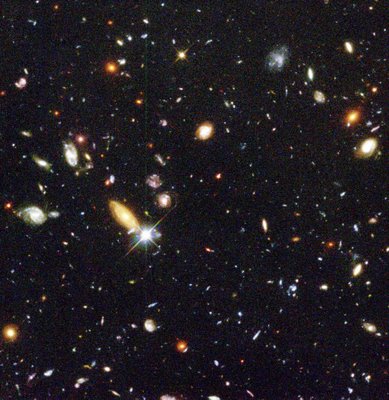
I have been reminded how cool the Hubble telescope Deep Field is. By pointing the telescope at a seemingly empty patch of sky, and leaving the exposure open, they have captured these amazing shots of how densely populated the universe is. Thousands of galaxys stretching into the visible distance. And each one may contain life!
But Hubble is also a time machine. Everything it can see is from the past. These galaxys are billions of light years away, which means what we are seeing are galaxys that are billions of years old when we see them.
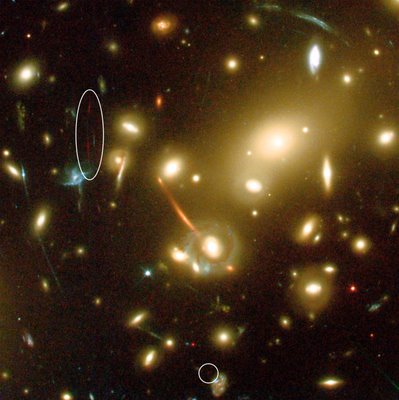
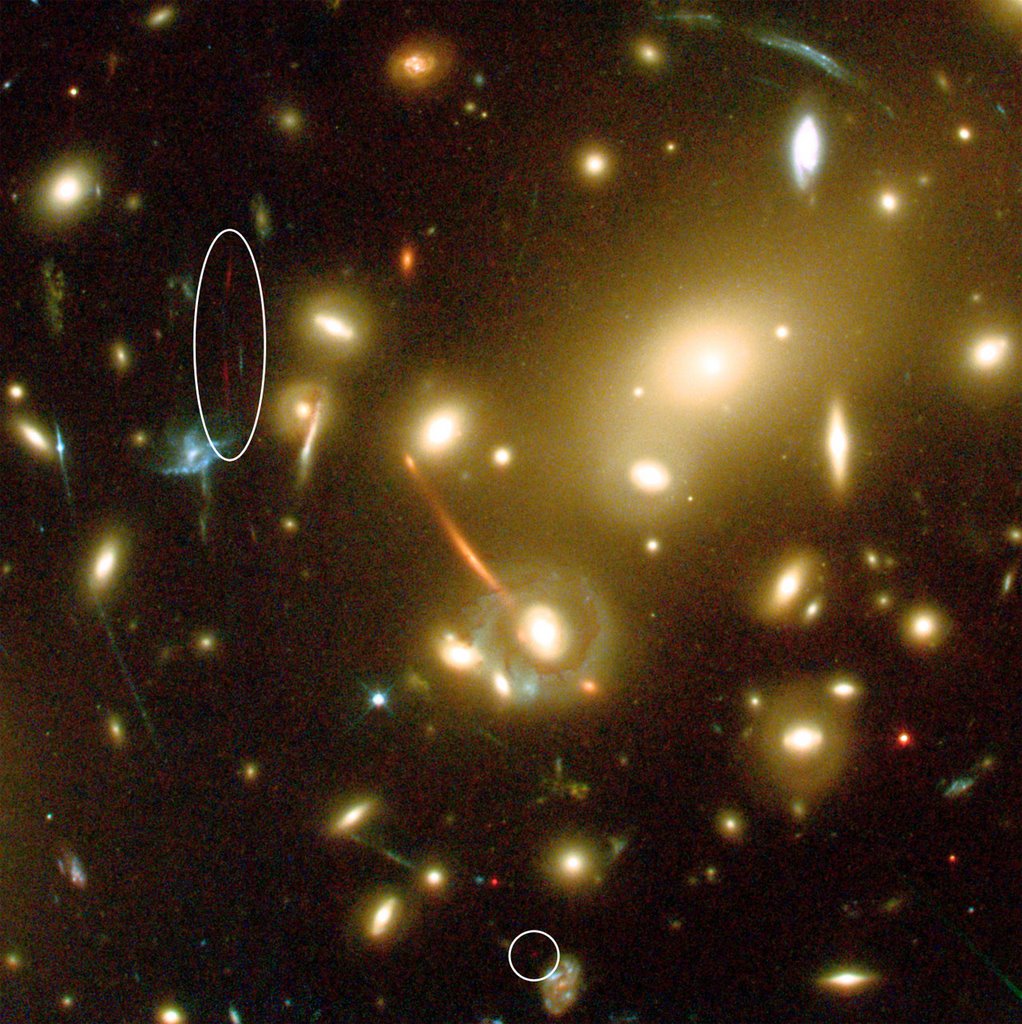
Including this photo of galaxy cluster Abell 2218. Abell is SO fat and its gravity is so strong that it is warping the light from galaxys behind it. It is called gravitational lensing and it makes light from behind it warp around it. You can see multiple images stretched and warped like a lens around it. It also amplifies images, making visable galaxies so far away that they could never be viewed with conventional instruments. The circled area shows a galaxy that is visible only because of the gravitational lensing. When they measured the red shift in the light, they discovered that the galaxy was 13 billion light years away, making the image 13 billion years old. The oldest thing ever seen by far.
Cool, huh?