Showing posts with label The Sun. Show all posts

Monday, November 10, 2008

Astronomy update


What's happening at the center of active galaxy 3C 75? The two bright sources at the center of this composite x-ray (blue)/ radio (pink) image are co-orbiting supermassive black holes powering the giant radio source 3C 75. Surrounded by multimillion degree x-ray emitting gas, and blasting out jets of relativistic particles the supermassive black holes are separated by 25,000 light-years. At the cores of two merging galaxies in the Abell 400 galaxy cluster they are some 300 million light-years away. Astronomers conclude that these two supermassive black holes are bound together by gravity in a binary system in part because the jets' consistent swept back appearance is most likely due to their common motion as they speed through the hot cluster gas at 1200 kilometers per second. Such spectacular cosmic mergers are thought to be common in crowded galaxy cluster environments in the distant universe. In their final stages the mergers are expected to be intense sources of gravitational waves.

Located just 500 light-years away toward the constellation Scorpius, this star is only slightly less massive and a little cooler than the Sun. But it is much younger, a few million years old compared to the middle-aged Sun's 5 billion years. This sharp infrared image shows the young star has a likely companion positioned above and left - a hot planet with about 8 times the mass of Jupiter, orbiting a whopping 330 times the Earth-Sun distance from its parent star. The young planetary companion is still hot and relatively bright in infrared light due to the heat generated during its formation by gravitational contraction. In fact, such newborn planets are easier to detect before they age and cool, becoming much fainter. Though over 300 extrasolar planets have been found using other techniques, this picture likely represents the first direct image of a planet belonging to a star similar to the Sun.

Why would Saturn show such strange colors? The robotic Cassini spacecraft currently orbiting Saturn has beamed back images showing that the northern hemisphere our Solar System's most spectacularly ringed planet has changed noticeably since Cassini arrived in 2004, now sporting unusual and unexpected colors. No one is sure why. Although the cause for many of Saturn's colors is unknown, the recent change in colors is thought to be related to the changing seasons. Pictured above, the unusual colors are visible just north of the dark ring shadows. The razor-thin plane of ring particles is visible nearly edge-on across the bottom of the image. The cloudy moon Titan looms large just above the rings, while close observation will reveal three other moons. Cassini arrived at Saturn in 2004, sending back data and images that have not only led to a deeper understanding of the Jovian world's atmosphere, moons, and rings, but also raised new mysteries.

On September 30, a spectacular bolide or fireball meteor surprised a group of amateur astronomers enjoying dark night skies over the Oklahoma panhandle's Black Mesa State Park in the Midwestern US. Flashing past familiar constellations Taurus (top) and Orion, the extremely bright meteor was captured by a hillside camera overlooking the 2008 Okie-Tex Star Party. Astronomy enthusiast Howard Edin reports that he was looking in the opposite direction at the time, but saw the whole observing field light up and at first thought someone had turned on their car headlights. So far the sighting of a such a bright bolide meteor, produced as a space rock is vaporized hurtling through Earth's atmosphere, really is a matter of luck.

Nineteenth century science fiction author Jules Verne wrote visionary works about Extraordinary Voyages including tales of space flight and the story of a journey From the Earth to the Moon. Fittingly, the European Space Agency's newly developed Automated Transfer Vehicle (ATV), a robotic spacecraft intended to deliver cargo to the International Space Station (ISS) was named in his honor and successfully docked with the ISS earlier this year. When the Jules Verne ATV was undocked and deorbited last month, its safely controlled reentry over the Pacific Ocean was followed by astronomers in order to make detailed comparisons of the actual event with computer models of spacecraft reentry and breakup in the atmosphere. This dramatic image of the fragmenting, 13-ton spacecraft is a high definition video frame recorded from NASA's DC-8 Airborne Laboratory.

Imagine a pipe as wide as a state and as long as half the Earth. Now imagine that this pipe is filled with hot gas moving 50,000 kilometers per hour. Further imagine that this pipe is not made of metal but a transparent magnetic field. You are envisioning just one of thousands of young spicules on the active Sun. Pictured above is perhaps the highest resolution image yet of these enigmatic solar flux tubes. Spicules dot the above frame of solar active region 10380 that crossed the Sun in 2004 June, but are particularly evident as a carpet of dark tubes on the right. Time-sequenced images have recently shown that spicules last about five minutes, starting out as tall tubes of rapidly rising gas but eventually fading as the gas peaks and falls back down to the Sun. These images also indicate that the ultimate cause of spicules is sound-like waves that flow over the Sun's surface but leak into the Sun's atmosphere.

Thursday, October 09, 2008

Moon Rays, Milky Ways, and Prominences


On September 7th, the first quarter Moon and passing clouds contributed to a dramatic night sky over the Byurakan Astrophysical Observatory. This panoramic view begins at the left looking toward the eastern horizon and the rising stars of the constellation Perseus. Sweeping your gaze to the right (south), you'll find the large observatory dome, housing a 2.6 meter diameter telescope, backlit by lights from nearby Yerevan, capital city of Armenia. Fittingly poised above the observatory dome is the bright, giant star Enif in the high-flying constellation Pegasus. Farther to the right, the brightest celestial beacon just above the clouds is our Solar System's ruling gas giant Jupiter. At the far right, the Moon is nearly hidden by an approaching cloudbank, but the clouds themselves actually cast shadows in the bright moonlight, creating the effect of Moon rays across the evening sky.


Is there any place in the world you could see a real sight like this? Yes. Pictured above is single exposure image spectacular near, far, and in between. Diving into the Earth far in the distance is part of the central band of our Milky Way Galaxy, taken with a long duration exposure. Much closer, the planet Jupiter is visible as the bright point just to band's left. Closer still are picturesque buttes and mesas of the Canyonlands National Park in Utah, USA, lit by a crescent moon. In the foreground is a cave housing a stone circle of unknown origin named False Kiva. The cave was briefly lit by flashlight during the long exposure. Astrophotographer Wally Pacholka reports that getting to the cave to take this image was no easy trek. Also, mountain lions were a concern while waiting alone in the dark for just the right exposure


On September 29, this magnificent eruptive solar prominence lifted away from the Sun's surface, unfurling into space over the course of several hours. Suspended in twisted magnetic fields, the hot plasma structure is many times the size of planet Earth and was captured in this view by the Sun-watching STEREO (Ahead) spacecraft. The image was recorded in extreme ultraviolet light emitted by ionized Helium, an element originally identified in the solar spectrum. Seen against the brilliant solar surface in visible light, such prominences appear as dark filaments because they are relatively cool. But they are bright themselves when viewed against the blackness of space, arcing above the Sun's edge.

Wednesday, April 02, 2008

How to destroy the Earth, parts 10 & 11


10. Hurled into the Sun

You will need: Earthmoving equipment.

Method: Hurl the Earth into the Sun, where it will be rapidly melted and then vaporized by the Sun's heat.

Sending Earth on a collision course with the Sun is not as easy as one might think. Contrary to popular opinion, Earth's orbit is not "unstable" and Earth will not begin to spiral into the Sun if we give it the slightest of nudges (otherwise, you can bet it would have happened already). It's surprisingly easy to end up with Earth in a loopy elliptical orbit which merely roasts it for four months in every eight. Careful planning will be needed to avoid this.

Earth's final resting place: a small globule of vaporized iron sinking slowly into the heart of the Sun.

Comments: As far as energy changes are concerned, this method is inferior to the next one.

This method is essentially a variation on the Solar Oven method listed above, wherein you bring the Sun to the Earth (in a manner of speaking).

Feasibility rating: 9/10. Impossible at our current technological level, but will be possible one day, I'm certain. In the meantime, may happen by freak accident if something comes out of nowhere and randomly knocks Earth in precisely the right direction.

Source: Infinity Welcomes Careful Drivers, by Grant Naylor

11. Ripped apart by tidal forces

You will need: Earthmoving equipment.

Method: When something (like a planet) orbits something else (like the Sun), the closer in it is, the faster it orbits. Mercury, the closest planet to the Sun, moves faster along its path than Earth, which in turn moves faster than Neptune, the furthest planet.

Now, if you move Earth close enough to the Sun, you'll find that it's close enough that the side of the Earth facing the Sun wants to orbit the Sun faster than the side pointing away from it. That causes a strain. Move Earth close enough, within an imaginary boundary called the Roche Limit, and the strain will be great enough to literally tear the planet Earth apart. It'll form one or more rings, much like the rings around Saturn (in fact this may be exactly where Saturn's rings came from). So our method? Move the Earth to within the Sun's Roche limit. Or, better, move it out, to Jupiter.

Moving the Earth out to Jupiter is much the same as moving the Earth in towards the Sun, the most obvious difference being your choice of vectors. However, there is another important consideration, and that is energy. It takes energy to raise or lower an object through a gravity field; it would take energy to propel the Earth into the Sun and it would take energy to propel it into Jupiter. When you do the calculations, Jupiter is actually rather preferable; it takes about 38% less energy.

Alternatively, it may be simpler to move Jupiter to Earth. The theory works like this: build a massive free-standing tower or "candle", with its lower end deep inside Jupiter's depths and its upper end pointing into space. Put machinery inside the tower to pull hydrogen and helium gases in as fuel, through ports in the middle section, and vent these elements out through fusion thrusters at the top and bottom. The tower is called a "candle" because it burns at both ends, see? Now: the flame directed downwards into Jupiter serves to keep the tower afloat (although some secondary thrusters would be needed to also keep it stable and upright). But this lower flame has no direct effect on the Jupiter/candle system as a whole, because all the thrust from the flame is absorbed by Jupiter itself. The two objects are locked together, as if the candle is balanced on a spring or something. The top flame, therefore, can be used to push both the candle and Jupiter along. The top flame pushes the candle which pushes the planet. This is a little unorthodox, and it only works on gas giants, but as means for moving planets it's at least as plausible as the mass-driver and gravity-assist methods described on the earthmoving page.

Earth's final resting place: lumps of heavy elements, torn apart, sinking into the massive cloud layers of Jupiter, never to be seen again.

Feasibility rating: 9/10. As before, impossible at our current technological level, but will be possible one day, and in the meantime, may happen by freak accident if something comes out of nowhere and randomly knocks Earth in precisely the right direction.

Source: Mitchell Porter suggested this method. Daniel T. Staal clued me in on the fusion candle technique, which he got from this Shlock Mercenary comic, which in turn was inspired by the novel "A World Out Of Time" by Larry Niven.

Friday, January 25, 2008

How to destroy the Earth, part 4


4.
Cooked in a solar oven

You will need: Means for focusing a good few percent of the Sun's energy output directly on the Earth.

What I'm talking about here is: mirrors, and lots of them. Intercept several decent sized asteroids for raw materials and start cranking out kilometre-square sheets of lightweight reflective material (aluminised mylar, aluminium foil, nickel foil, iron foil or whatever you can scrape together). They need to be capable of changing focus direction at will because it is generally impossible to place things stationary in space and the relative positions of the Earth and Sun will be shifting as time passes, so attach a few manoeuvering thrusters and a communications and navigation system to each sheet.

Preliminary calculations suggest you would need roughly two trillion square kilometres of mirror.

Method: Command your focusing array to concentrate as much solar energy as you can directly on the Earth - perhaps on its core, perhaps at a point on its surface. So the theory goes, this will cause the Earth to generally increase in temperature until it completely boils away, becoming a gas cloud.

A variation on this method involves turning the Sun into a gigantic hydrogen gas laser.

Earth's final resting place: A gas cloud.

Feasibility rating: 3/10. The major problem here is: What's to stop the matter cooling and becoming a planet again? In fact, once the top layer of planet becomes gaseous, what would compel it to vent into space rather than remaining on the surface, absorbing more heat and preventing the lower layers from even being heated? Unless the amount of heat put in was really immense, all you'd get is a gas planet at best, and a temporary one at that. Moving the Earth towards the Sun (see later) is likely to be a far more viable method.

Source: This method suggested by Sean Timpa.

Friday, October 05, 2007

I told you it was dangerous out there!


I have often gone on about how powerful the various cosmic rays out in space are. Bursts of energy that are measured in terms greater than we can comprehend. Our Sun churns out more energy in day than all the nuclear energy ever generated on this planet.

The Sun preiodically chucks out lumps of its self into space in whats called a Coronal Mass Ejection (CME). They dont cause us too much trouble as we have a magnetic field and an atmosphere to keep most of the energy out. The energy hit its the force field of our magnetic field, and ripples across it in what we call the Aurora ;)


Please click on this link and play clip on the page: http://antwrp.gsfc.nasa.gov/apod/ap071003.html

What you are watching is a comet run into a Cornal Mass Ejection and having its ten million mile tail ripped off!

I told you it was powerful out there.

Sunday, December 24, 2006

Happy Christmas


Happy Christmas and New Year to everyone.

Tuesday, September 26, 2006

International Space Station


A slow week. But a couple of cool photos to share.

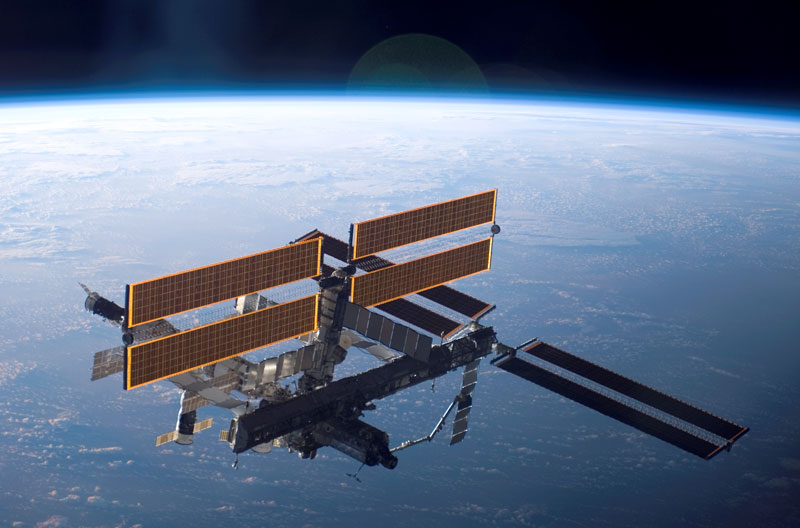
A fantastic shot of the space shuttle docking with the International Space Station sillouetted against the sun. Very clever.


And this is what it was fitting. A nice new huge set of solar pannals. Its getting big now.

:)

Friday, August 25, 2006

The Poles are taking over Britain....apparently


New figures from the Home Office have shown that visitors from the new EU succession countries have numbered 650,000. The government predicted 15,000, lol.

I'm all for freedom of movement. Its nice to see different people all over the place. There are two Polish lads working at my local Subway. They are both always nice and polite.

But vast amounts of foriegners in the UK always gets the debate going. Two many immigrants, not enough immigrants...yada yada yada. The Brits are actually a very tollerant people, but they cant stand the idea of people taking liberties with our laws and taxes. This debate will just keep going, with the Romanians and Bulgarians getting it next year.

But it got me thinking. Now that I actually know a Pole, I should ask; What does Poland think about a load of young, productive and tax paying Poles moving to other countries and supporting their ecconomies?

Is it a debate in your country, Kasia? Tell all!!!

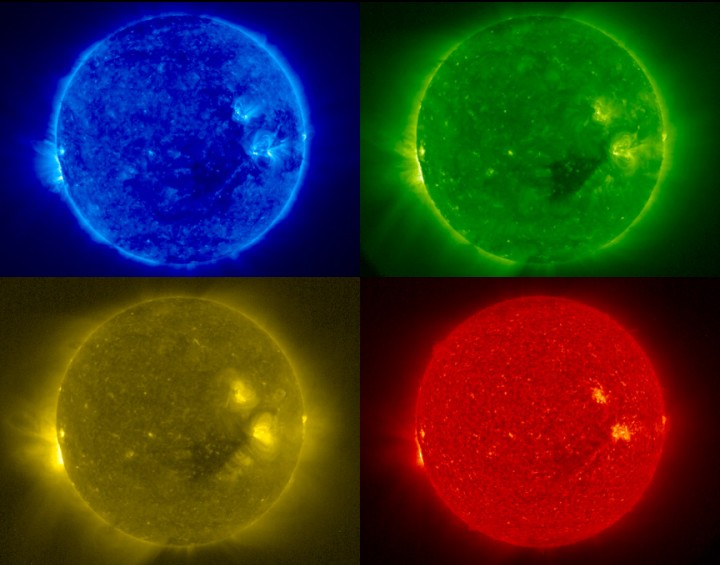
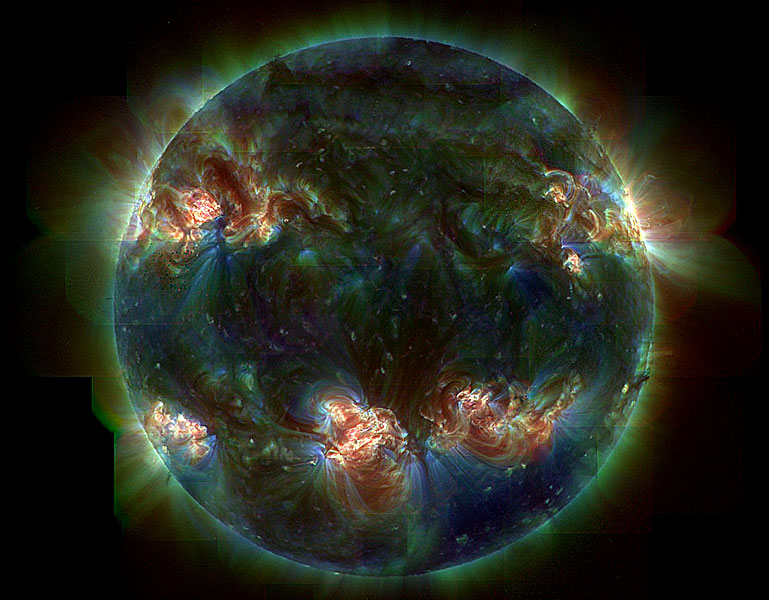
The magnificent picture is from the Solar Observitory SOHO. The Sun in Ultraviolet.

Nice

:)

Monday, August 07, 2006

Super cool photo of the Sun


Every now and again Astronomy Picture of the Day prints an photo that just blows me away. Today was no different. Viola.. A Solar Prominance. And a big one at that. Arnt we small? lol

Not much to report. Mum & Dad back from holiday and its the official worst holiday ever. And thats saying something. Poor sods!

I hate work and I hate poker (the tease!) but I like Ike. Sorry old US political joke :)


Peace out.